

Reopening of the Strait of Hormuz: A New Starting Point for Global Shipping Order and Regional Stability
Introduction
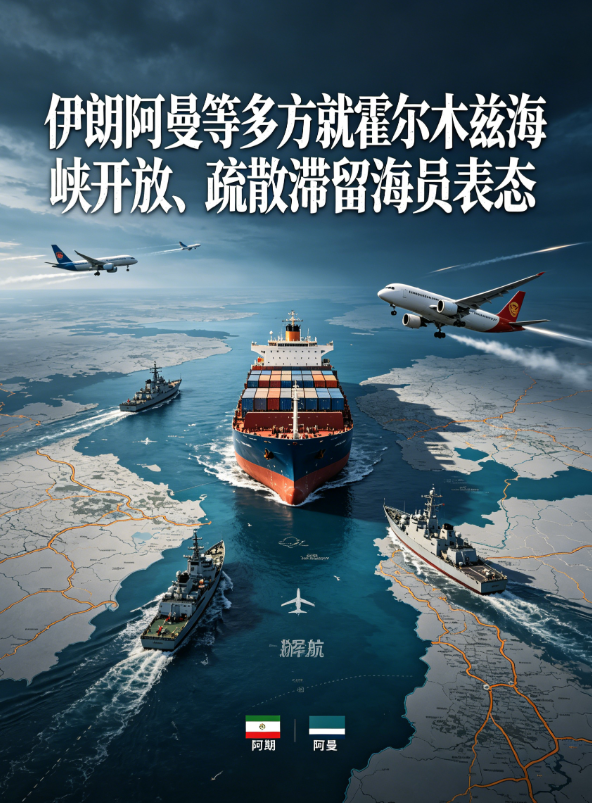
On April 23, 2025, the Strait of Hormuz—a strategic waterway carrying about one-third of the world's seaborne oil trade—witnessed a major turning point. Iranian authorities announced the same day that the Strait of Hormuz was fully open to commercial vessels at no charge. Meanwhile, the International Maritime Organization (IMO) officially launched an evacuation plan for stranded seafarers, and Oman announced the opening of a temporary maritime waterway. These developments mark a gradual restoration of shipping order in the Strait of Hormuz since tensions in the Middle East, and a return of international confidence in regional stability.
The reopening of the Strait of Hormuz is not just a technical restoration of shipping but also reflects complex interactions between regional powers, global energy markets, and the international shipping system. This article provides in-depth analysis from the perspectives of the strait's strategic value, multi-party games behind the reopening, humanitarian concerns for stranded seafarers, legal and security considerations of the temporary waterway, and potential impacts on global energy and shipping markets.
Strategic Value and Historical Background of the Strait of Hormuz
The Strait of Hormuz, located between the Persian Gulf and the Gulf of Oman, is only about 39 kilometers at its narrowest point but is one of the world's most critical energy chokepoints. Statistics show that about 30% of global seaborne oil passes through this strait, along with large quantities of LNG, petrochemicals, and container cargo. For major Middle Eastern oil producers, this is their economic lifeline; for energy consumers in East Asia, Europe, and the Americas, it is the "Achilles' heel" of energy security.
In recent years, with repeated fluctuations in the Middle East situation, the safety of passage through the Strait of Hormuz has become a frequent international focus. From late 2023 to early 2025, due to escalating regional conflicts, the strait faced restricted passage and stranded commercial vessels. Some ships were forced to reroute around the Cape of Good Hope, significantly increasing shipping costs and putting enormous pressure on global energy supply chains. This full reopening is undoubtedly a positive signal for global trade and energy markets.
Iran Announces Full Opening: Political Motives and Negotiation Prospects
Iran's Permanent Representative to the UN Office in Geneva, Bahreini, emphasized in his statement on the 23rd that the Strait of Hormuz is fully open to commercial vessels at no charge. However, he pointed out that after 60 days, the specific situation will depend on the outcome of negotiations between Iran and the US. This statement carries deep meaning—the opening is not unconditional or indefinite, but tightly linked to Iran-US relations.
From Iran's perspective, this move to open the strait includes at least three considerations:
First, a pragmatic choice under economic pressure. Long-term blockade or restriction of the strait, while exerting pressure on the international community, also greatly damages Iran's own economic interests. Iran's oil exports heavily rely on this strait; a blockade is like "killing a thousand enemies and losing eight hundred of your own." Under sanctions and economic difficulties, restoring strait navigation is a realistic move to ease domestic economic pressure.
Second, an active stance in diplomatic games. Iran chose to announce the opening first at the IMO and UN platforms, aiming to show its image as a responsible regional country and reduce international isolation caused by the blockade. This also accumulates leverage for upcoming Iran-US negotiations.
Third, long-term demands for a management mechanism. The joint statement agreed to form a joint working group to reach consensus on the future navigation management mechanism, related service arrangements, and fee standards for the Strait of Hormuz, ensuring compliance with international standards. This implies that both Iran and Oman seek to establish new institutional arrangements in the medium to long term regarding navigation rules, services, and security.
Oman's Coordinating Role: Establishment of a Temporary Waterway and Regional Dialogue
Oman played a key coordinating role in restoring strait navigation. In the early hours of the 24th, Oman issued a statement saying it had coordinated with the IMO to open a temporary maritime waterway for all vessels. Meanwhile, Oman and Iran issued a joint statement the same day, reiterating their commitment to ensuring safe passage through the Strait of Hormuz and agreeing to consult with Gulf coastal states and other relevant parties.
Oman's ability to serve as an acceptable interlocutor stems from its unique regional position. As a relatively neutral country in the Gulf, Oman has long played a bridge between Iran and the US and Gulf states. By actively opening a temporary waterway and promoting dialogue on the strait's management mechanism, Oman not only helps ease regional tensions but also enhances its own voice in international shipping affairs.
The statement particularly stressed that all arrangements involving the Strait of Hormuz must fully respect the sovereignty and sovereign rights of the two states as coastal states of the strait. This phrasing reaffirms relevant provisions of UNCLOS and responds to Iran's long-standing claim that "coastal states of the strait have special rights." Finding a balance between respecting coastal state sovereignty and safeguarding international navigation freedom will be a core challenge in future mechanism design.
Evacuation of Stranded Seafarers: Humanitarian Concerns and International Cooperation
IMO Secretary-General Dominguez announced the launch of a plan to evacuate stranded seafarers in the Strait of Hormuz region. Under the plan, the IMO will work closely with Iran, Oman, and other regional coastal states, the US, and the international shipping industry to evacuate over 11,000 seafarers still stranded in the region. The IMO has obtained security assurances and fully verified safe navigation conditions in the relevant waters.
These 11,000 seafarers are often an overlooked group in the global shipping system. Many of them have been trapped on ships for months since the strait was closed, facing shortages of supplies, deteriorating health, and psychological pressure. The international attention to seafarers' plight reflects the effectiveness of long-term efforts by the IMO and the International Transport Workers' Federation to protect seafarer rights.
The launch of the seafarer evacuation plan is not only a major humanitarian action but also a test of the willingness and efficiency of cooperation among parties in a crisis. From a security perspective, it is necessary to ensure that evacuation routes are not mistaken for hostile acts; from a coordination mechanism perspective, it requires cooperation among coastal states, flag states, and shipping companies. As a specialized UN agency, the IMO can provide legal frameworks and technical support, but final implementation depends on goodwill and collaboration among regional countries.
Restoration of Navigation: Data Behind Market Confidence
Citing data from professional agencies, AFP reported that on the 22nd, at least 36 commercial vessels transited the Strait of Hormuz, with traffic recovering to about one-third of pre-conflict levels. On the 23rd, two stranded "supertankers" each carrying 2 million barrels of crude oil passed through the strait. Reports suggest the actual number may be higher.
These figures indicate that shipping activities are recovering relatively quickly since the full opening. In particular, the passage of supertankers is a symbolic indicator for the global crude market. With global crude demand remaining somewhat resilient, the restoration of Strait of Hormuz navigation helps relieve oil prices previously pushed up by expectations of supply disruption.
However, the figure of "one-third" also reminds us that full recovery to pre-conflict shipping levels will take time. On one hand, some shipping companies are still assessing safety risks and have not immediately resumed passage; on the other, adaptation in insurance clauses, contract execution, and port operations also requires time. More importantly, the uncertainty of the outcome of Iran-US negotiations in 60 days makes it difficult for market participants to make medium- and long-term decisions.
Conclusion and Outlook: From Emergency Recovery to Institutional Construction
The reopening of the Strait of Hormuz undoubtedly injects a shot of confidence into global energy security and shipping order. The joint statement by Iran and Oman, the involvement of the IMO, and the launch of the seafarer evacuation plan all indicate that parties chose dialogue and cooperation over confrontation after the crisis.
However, in the long run, one-off emergency recovery does not equate to institutionalized stable guarantees. The outcome of Iran-US negotiations in 60 days, the construction of coordination mechanisms between Iran and Gulf states, whether Oman's temporary waterway will become a permanent arrangement, and how to balance coastal state sovereignty and navigation freedom—these issues remain to be resolved. As the statement emphasized, the future needs to gradually establish a navigation management framework meeting international standards through mechanisms such as joint working groups and multilateral consultations.
For the global shipping industry, geopolitical risk is always an unavoidable systemic challenge. The lessons of the Strait of Hormuz remind all countries: the security of energy channels cannot rely solely on temporary political tacit understanding but requires the construction of legally binding, multi-party institutional arrangements. The rights of seafarers need more normalized protection mechanisms, not just to be remembered when crises arise.
In summary, the reopening of the Strait of Hormuz is both a positive end to a past crisis period and an important beginning for the construction of a future regional order. The global shipping and energy markets are watching this "Middle East gate" with hope and caution, wondering whether it can truly and persistently remain open.