


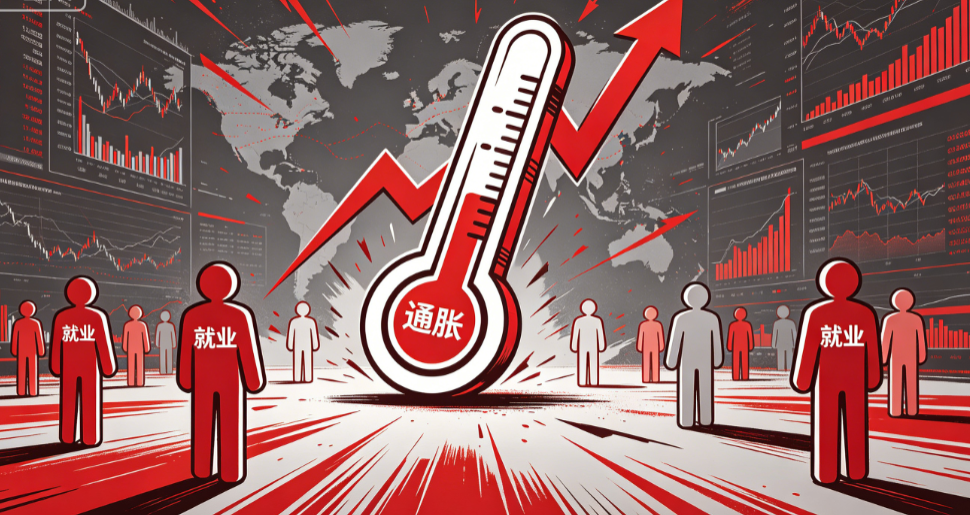
Inflation Target and Dual Mandate: Analysis of New York Fed President Williams' Policy Stance
Keywords
New York Fed; Williams; monetary policy; inflation target; dual mandate; employment risk; rate adjustment
Introduction
Amid uneven global economic recovery and ongoing geopolitical risks, the Fed's monetary policy direction remains a key focus for markets. In April 2025, New York Federal Reserve Bank President John Williams delivered an important signal in a public speech: the current monetary policy stance is sufficient to steadily bring inflation back to the 2% target level, but he also candidly acknowledged that risks to achieving the dual mandate of employment and price stability remain non-negligible. This statement reflects the Fed's cautious assessment of policy effects after consecutive rate hikes and hints at the complexity and uncertainty of future policy paths. This article will analyze Williams' views from four dimensions—policy framework, inflation logic, labor market dynamics, and risk balance—to provide a systematic perspective for understanding the Fed's next moves.
1. Current Monetary Policy Stance: Fully Tight or Marginal Adjustment?
Williams emphasized that "the current monetary policy stance can effectively push inflation steadily lower," a qualitative judgment that implies multiple policy logics. Since March 2022, the Fed has raised rates by a total of 525 basis points, bringing the federal funds rate target range to 5.25%-5.50%, the highest level in 22 years. Meanwhile, the Fed has initiated quantitative tightening, reducing up to $95 billion in Treasury and mortgage-backed securities per month. Against this backdrop, Williams' remarks aim to convey three key messages to the market:
First, policy rates have entered a "restrictive range." According to the dot plot released by the Fed in December 2024, most officials expect three rate cuts in 2025, but Williams did not give a specific timeline this time; instead, he emphasized that current policy is "sufficiently tight." This suggests that concerns about inflation persistence still dominate within the Fed, and easing too early could undo progress.
Second, inflation is encountering resistance in the "last mile." Although the headline inflation rate has dropped from a high of 9.1% in 2022 to 2.8% in March 2025, core services inflation (especially housing and wage-driven services) remains stubbornly around 3.5%. Williams acknowledged that "risks still exist," targeting this structural stickiness.
Third, the rate path will be highly data-dependent. He did not specify the trigger conditions for rate cuts, instead emphasizing the need to "see more evidence that inflation is sustainably returning to 2%." This suggests the Fed may adopt a "higher for longer" strategy; even if rate cuts begin, the pace will be very gradual.
2. Credibility of Inflation Target and Real Challenges
The Fed has set 2% as its long-term inflation target, and Williams believes current policy can bring inflation "steadily lower" to that target, confidence based on three pillars: cooling demand, supply chain repair, and anchored inflation expectations.
On the demand side, high rates have significantly suppressed investment and consumption in interest-sensitive sectors like real estate and automobiles. US GDP growth slowed from 2.5% in 2023 to 1.9% in 2024, and further to 1.6% in Q1 2025. Consumer spending is shifting from goods to services, but overall consumption momentum is weakening, with the savings rate falling to a historic low of 3.8%. These signals indicate the economy has transitioned from overheating to equilibrium.
On the supply side, the global supply chain pressure index has returned to normal levels from its 2021 historical peak, with significant improvements in freight costs and delivery times. Additionally, the labor force participation rate recovered to 62.8% in early 2025, approaching pre-pandemic levels, helping to ease the wage-price spiral.
However, the "risks" Williams mentioned are also significant. First, geopolitical conflicts could push up energy and food prices, causing headline inflation to rebound. Second, the spillover effect of fiscal deficit expansion—the US fiscal year 2025 budget deficit is expected to reach $1.5 trillion, or 5.6% of GDP—could provide additional support for inflation on the demand side. Third, the lag in housing inflation—although new lease rents have begun to decline, owner-equivalent rent (OER) will remain elevated for another 6-12 months due to statistical lags. These factors together constitute "bumps" on the path of inflation decline.
3. Labor Market: Fragile Transition from Overheating to Balance
Williams listed "risks to the dual mandate of employment and price stability," highlighting the delicate state of the current labor market. In March 2025, the US unemployment rate remained at a low of 3.8%, close to the natural rate (estimated at 4.0%-4.2%), with average monthly nonfarm payroll additions of about 200,000, still above the pre-pandemic trend. But structural changes behind the numbers are worth attention.
On one hand, increased labor force participation is easing supply-demand mismatches. In Q1 2025, the 25-54 prime-age labor force participation rate rose to 83.5%, the highest since 2000. Meanwhile, the job openings-to-unemployment ratio (V/U ratio) fell from a peak of 2.0 in 2022 to 1.2, close to pre-pandemic levels. This means employer hiring difficulty has eased, easing wage growth pressure.
On the other hand, employment growth by industry is more divergent. Healthcare, government services, and leisure/hospitality continue to expand hiring, but manufacturing, finance, and technology sectors are experiencing layoffs or hiring freezes. This "ice and fire" situation makes it difficult for the Fed to use aggregate tools for precise adjustment. If rates are cut too quickly, it could stimulate service demand and push up inflation further; if high rates are maintained too long, it could harm vulnerable sectors, leading to an unexpected jump in unemployment.
Williams acknowledged that "risks exist," reflecting vigilance about this asymmetric risk. He hinted that the Fed will closely monitor early warning indicators like the Sahm Rule—when the three-month moving average unemployment rate rises 0.5 percentage points above the 12-month low, it often signals an approaching recession. Currently, this indicator is 0.3 percentage points, near the critical zone.
4. Balancing the Dual Mandate: Data Dependency and Forward Guidance
The Fed's statutory goals are "maximum employment" and "price stability," and Williams' statement essentially recalibrates the current state of both. From a Taylor Rule perspective, assuming an equilibrium real rate of 0.5%, natural unemployment of 4.1%, and inflation target of 2%, the current federal funds rate (about 5.5%) is significantly higher than the rule's suggested value (about 4.5%), representing a highly restrictive stance. This means that if inflation steadily declines, the Fed can and should gradually cut rates to avoid overtightening.
But Williams did not give a timeline for rate cuts, instead emphasizing "patience." This strategy has its own logic: after the 2008 financial crisis, the Fed was criticized for prematurely exiting quantitative easing, delaying recovery; in 2021, when inflation surged, the Fed was slow to act due to the "transitory" view. Now, the Fed prefers "risk management"—better to cut rates later to ensure inflation is fully under control. This bias may bring another risk: if the economy stalls unexpectedly, the Fed's lagging response could lead to a sharp deterioration in the labor market.
Looking at market reaction, after Williams' speech, the US dollar index strengthened briefly, and the 10-year Treasury yield edged up to 4.35%, reflecting market interpretation of "hawkish delay in rate cuts." But futures markets still price in a first 25bp rate cut in September 2025, with total cuts of 75bp for the year. This expectation gap itself is a source of risk—if actual Fed cuts are smaller than expected, markets could adjust sharply, and tighter financial conditions could in turn hurt the real economy.
5. Conclusion: Prudent Progress and Non-Negligible Structural Challenges
In summary, Williams' speech paints a picture of the Fed walking a tightrope in the inflation decline channel: current tightening policies are having their intended effect, but the stickiness of inflation in the last mile and labor market divergence require policymakers to be extremely cautious. The Fed cannot rush to cut rates due to short-term inflation improvement, nor delay action due to labor market concerns.
Looking ahead to H2 2025 to 2026, the policy path will highly depend on the following variables: whether rent and service prices can see broader declines; whether the labor market experiences "non-linear" deterioration; and whether geopolitical shocks push up inflation expectations. If all these variables move in a favorable direction, the Fed may begin gradual rate cuts in H2, but the magnitude and pace will be far weaker than market optimism. Conversely, if inflation rebounds or unemployment breaks above 4.5%, the Fed may be forced to make a difficult choice between "protecting employment" and "controlling inflation."
For market participants, the signal from Williams means: easing trades may be premature, but tightening trades also carry risk. The best strategy is to stay flexible, closely watching economic data itself rather than predetermined policy paths. After all, in an era of uncertainty, the Fed itself is "learning by doing," and Williams' candor is the best footnote to this complexity.




