


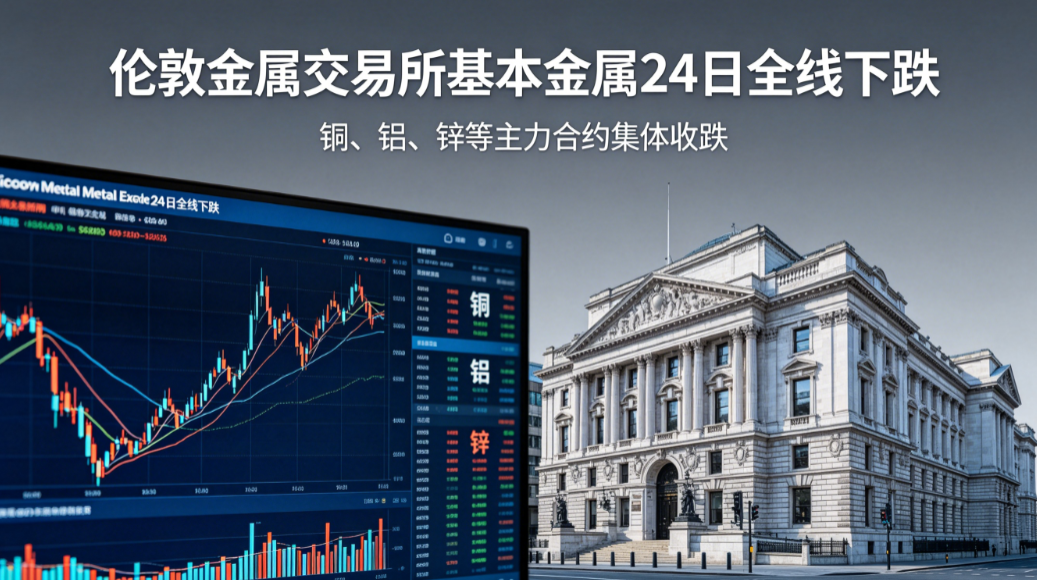
LME Base Metals Plunge Across the Board: Double Squeeze from Macro Tightening and Geopolitical Easing
On May 24, 2025, base metal prices on the London Metal Exchange (LME) experienced a comprehensive decline, with none of the six major varieties spared. Among them, aluminum suffered the most severe drop, plunging 4.43% in a single day; tin followed closely, falling 3.05%; copper, nickel, and zinc all fell over 2.5%, while lead saw a relatively milder decline of 1.59% to $1,913.50. Behind this systemic sell-off, the dual pressure from hawkish Fed policy signals and easing geopolitical risks overshadowed the existing supply-side positives.
Macro Tightening Expectations Dominate Market Sentiment
Looking at specific data, three-month copper settled at $13,026.50 per ton, down $347 from the previous session, a 2.59% decline, breaching the $13,200 mark. Aluminum closed at $3,115 per ton, down $144.50, or 4.43%, making it the weakest performer of the day. Nickel ended at $16,795, down $435, or 2.52%; tin plunged $1,555 to close at $49,500, down 3.05%; zinc closed at $3,408, down $93.50, or 2.67%; lead was relatively resilient, dropping only $31 to $1,913.50, down 1.59%.
Market analysts point out that the core driver of this broad decline came from the latest hawkish signals from the Federal Reserve. Fed officials have recently made frequent hawkish remarks, hinting at a possible acceleration in rate hikes to curb inflationary pressures. This expectation quickly transmitted to the foreign exchange market, pushing the US dollar index to a 13-month high. Since base metals are priced in US dollars, a stronger dollar directly makes metals more expensive for buyers using other currencies, suppressing global demand and putting comprehensive pressure on metal prices from a valuation perspective.
Geopolitical Risk Easing Intensifies Selling Pressure
Resonating with the macro tightening expectations is a significant cooling of geopolitical risks. The US and Iran signed a "60-day pact" agreement and formally opened the Strait of Hormuz for navigation. This major détente signal triggered a concentrated unwinding of the risk premium accumulated earlier. In the past few months, due to tensions in the Middle East, market concerns over supply chain disruptions had driven up prices of some metals, especially aluminum and zinc, which are closely linked to energy transportation.
However, with the reopening of the strait, market fears of supply disruption quickly receded, forcing speculative long positions to close out, exacerbating the price decline. The rapid release of this geopolitical premium indicates that part of the momentum driving metal prices higher was not from fundamental improvements but from risk sentiment. Once uncertainty diminishes, prices undergo a sharp correction.
Notably, although the base metals market had previously seen positive supply-side factors such as tightening copper concentrate supply and constrained bauxite transportation, under the current dual pressure of rising macro tightening expectations and fading geopolitical risks, supply-side positives have been completely overshadowed by systemic financial market risks. Market participants prioritize risk release over focusing on supply-demand fundamentals.
Looking ahead, base metal prices still face significant downside pressure in the short term. If the Fed maintains its hawkish stance and the US dollar remains strong, metal markets may continue to suffer valuation shocks. Meanwhile, the process of unwinding geopolitical premiums may not yet be complete, especially for varieties that have risen significantly—they still face the risk of catching up on declines. However, over the medium term, the resilience of global economic recovery, structural demand for metals like copper and nickel from the new energy transition, and supply bottlenecks in some mining regions may still provide price support. The market will closely watch the upcoming US inflation data and Fed officials' speeches to gauge the policy direction's further impact on commodity markets.