

Global Market Turmoil: Gold Loses $4,000, Tech Giants Lay Out New AI Tracks
Introduction
In April 2025, global financial markets experienced a new round of sharp volatility. On one hand, traditional safe-haven asset gold broke below the key psychological level of $4,000 per ounce, with silver also plunging, reflecting market repricing of interest rate paths and the dollar trend. On the other hand, tech giants were active in the AI field—Nvidia emphasized that AI investment returns have been verified; Qualcomm acquired an AI startup for nearly $4 billion to accelerate its transformation toward software and data centers; OpenAI showcased breakthroughs in its self-developed chip. Meanwhile, international oil prices came under pressure due to continued navigation through the Strait of Hormuz, and US retail capital once again focused on classic brands. This article reviews core market dynamics of the week from four dimensions: precious metals, energy, automotive, and technology, analyzing the underlying logic.
I. Precious Metals and Energy Markets: Double Impact of Dollar Strength and Geopolitical Risk Deterioration
Gold and Silver Under Pressure, Rate Hike Expectations Heat Up
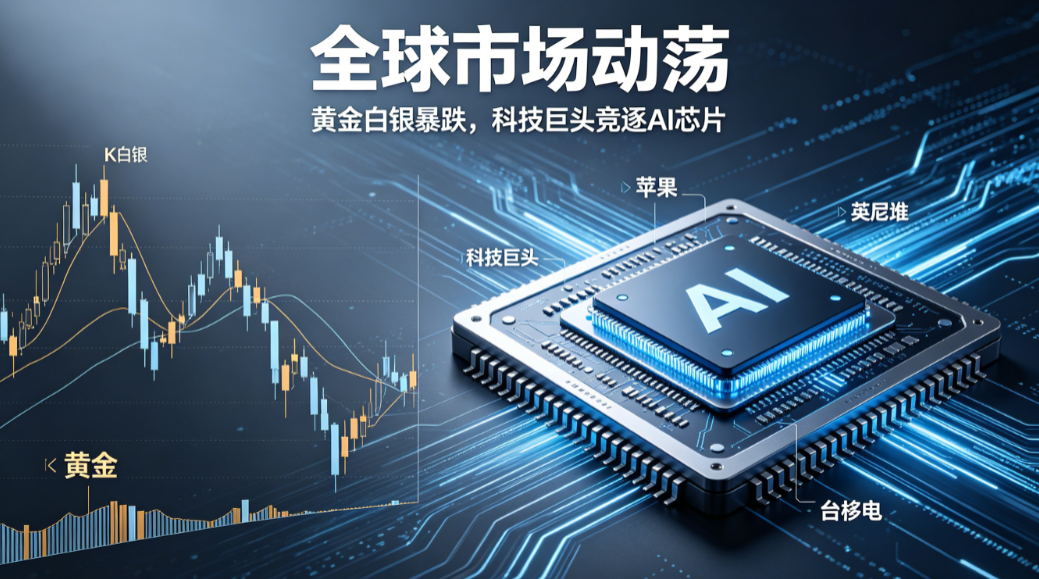
On Wednesday, spot gold fell below $4,000 per ounce for the first time since November 2025, at one point dropping more than 3% to hit a near-term low of $3,964.64. Silver fell even more sharply, at one point losing over 8%, falling below $60 per ounce. Analysts pointed out that the main driver of this plunge was the continued strength of the US dollar and rising market expectations of further interest rate increases. The Fed's recent hawkish signals increased the appeal of dollar assets, while gold, as a non-yielding asset, faced selling pressure during a rate hike cycle. Additionally, the pace of gold purchases by major central banks slowed, and profit-taking by long positions exacerbated the downward trend.
Brent Crude Falls Below $75, War Premium Rapidly Evaporates
Energy markets also faced a cold spell. Brent crude oil futures fell below $75 per barrel for the first time since the outbreak of the Iran war, with a daily drop of more than 3%. The "war premium" previously pushed up by geopolitical conflict is rapidly dissipating, primarily because the Strait of Hormuz continues to remain navigable, significantly reducing the risk of crude supply disruption. The market is refocusing on the interplay between weak global demand and OPEC+ production policies; oil prices may remain under pressure in the short term.
II. Tech Giants Compete for AI Computing Power and Chip Self-Sufficiency
Nvidia Shareholder Meeting: Jensen Huang Validates AI Investment
In the early hours of Thursday Beijing time, the world's most valuable listed company, Nvidia, held its annual shareholder meeting. AI industry leader Jensen Huang explicitly stated that the question of AI investment returns "already has an answer." He analogized AI data centers to "factories that manufacture tokens," emphasizing that each token can be transformed into code, answers, designs, actions, or services, thereby becoming a profit unit. This statement aims to respond to market doubts about whether massive AI capital expenditures can yield returns, injecting confidence into Nvidia's narrative of sustained high growth.
Qualcomm Acquires Modular for Nearly $4 Billion, Targets Cross-Platform AI Software
On Wednesday, Qualcomm announced it would acquire AI startup Modular in a stock-for-stock transaction valued at nearly $4 billion. Modular's core technology allows AI models to run across different chips without requiring separate coding for each processor. This acquisition marks Qualcomm's strategic shift from a traditional communication chip giant to the AI software and data center domain. Following the news, Qualcomm's stock fell as much as 4% during trading, reflecting market concerns about integration risks and short-term financial pressure.
OpenAI’s Self-Developed Chip Revealed: Dual Breakthrough in Performance and Cost
On Wednesday evening Beijing time, OpenAI unveiled its custom AI chip developed in collaboration with Broadcom. According to the company, the chip delivers per-watt performance surpassing the current state-of-the-art, while reducing costs by about 50%. This move indicates that OpenAI is attempting to vertically integrate hardware to reduce reliance on third-party chips like Nvidia, building a full technology stack from models to chips. The photo of the two CEOs (Altman and Chen Fuyang) holding a wafer pushed this "chip arms race" to new heights.
III. Autonomous Driving and Energy Sectors: Accelerated Diversified Layout
Amazon Zoox Unveils Next-Generation Robotaxi
Amazon's autonomous driving subsidiary, Zoox, released its "next-generation" self-driving taxi on Wednesday, featuring multiple upgrades in passenger experience and mass production readiness: higher-quality in-vehicle touchscreens, more comfortable seats and headrests, and thoughtful details to help passengers find lost items. This move coincides with Zoox's plan to accelerate larger-scale deployment in the US market this year, demonstrating Amazon's long-term bet and patience in the autonomous driving field.
Sunrun Partners with Tesla to Enter Data Center Power Supply
Shares of US home solar service provider Sunrun surged over 30% at one point, after the company announced a partnership with Tesla and Renew Home to supply electricity to data centers and utilities. The explosive growth in AI computing demand is driving a sharp rise in data center energy consumption, and the distributed power supply model of solar + storage is emerging as a new solution. The partnership between Sunrun and Tesla expands home photovoltaic systems from residential scenarios to high-value commercial and industrial settings, opening new growth space.
IV. Gaming and Consumer: Presale Frenzy and Retail Moment
GTA VI Presale Begins: Price Hike Doesn't Dampen Fan Excitement
As a major event in the global cultural media market of 2026, Take-Two Interactive Software announced that presales for Grand Theft Auto VI (GTA VI) would begin at midnight local time Thursday. Despite a price increase, analysts widely believe the game will break the series' sales records. The "top-tier effect" in the gaming industry once again confirms: in the face of premium content, consumer price elasticity is extremely limited.
Wendy's Stock Surges: Retail Investors Resurface
US retail investors have set their sights on fast-food chain Wendy's, whose stock surged over 40% at one point on Wednesday, reaching its highest level since November 2025. This mirrors the retail investor frenzy seen previously with GameStop, reflecting that short-term speculative behavior driven by social platforms remains active. However, such moves often lack fundamental support, and investors should be cautious of the risk of a sharp pullback.
Conclusion
This week's market presented a stark "ice and fire" pattern: traditional assets like gold, silver, and crude oil came under pressure due to macro factors, while technology niches such as AI, autonomous driving, and data center power supply continued to attract capital. Competition among tech giants in AI chips, software, and vertical integration is intensifying—this is not just a commercial game but also about defining the next generation of computing paradigms. At the same time, retail speculative behavior and the booming gaming industry reflect extreme divergence in market sentiment amid ample liquidity. Looking ahead, investors need to closely monitor the Fed's rate path, geopolitical developments, and the actual pace of AI commercialization, seeking structural opportunities amid volatility.
Keywords: Gold Plunge, Dollar Strengthening, AI Investment Returns, Qualcomm Acquires Modular, OpenAI Self-Developed Chip, GTA VI Presale, Retail Frenzy